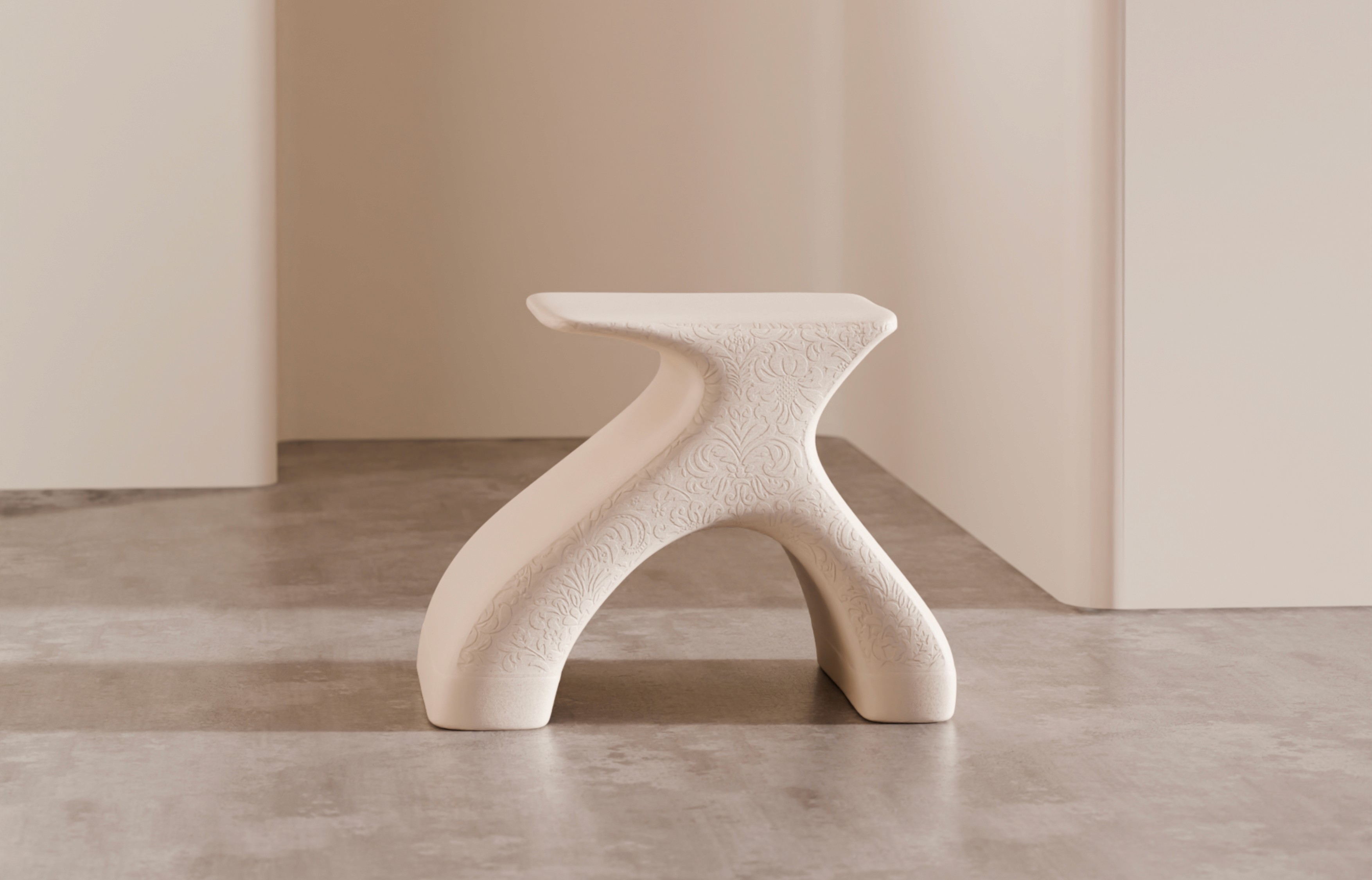
Skepsi - The Thinking Chair
Intro
SKEPSI (Greek for "thinking") is a purpose-built chair designed to create space for contemplation in an age of constant distraction.
Developed for a design competition hosted by Vizcom and Decibel, the brief challenged designers to create furniture that tells a compelling story and inspires a broader movement. Rather than designing another aesthetically interesting chair, I chose to address an increasingly universal problem: Finding mental space to think deeply in modern life.
Skills:
Creative Direction
3D Printing
Product Design
AI Workflow integration
Ideation
Rendering
Texturing
3D Modeling
Year
/
2025
Design Competition
Furniture
The Challenge
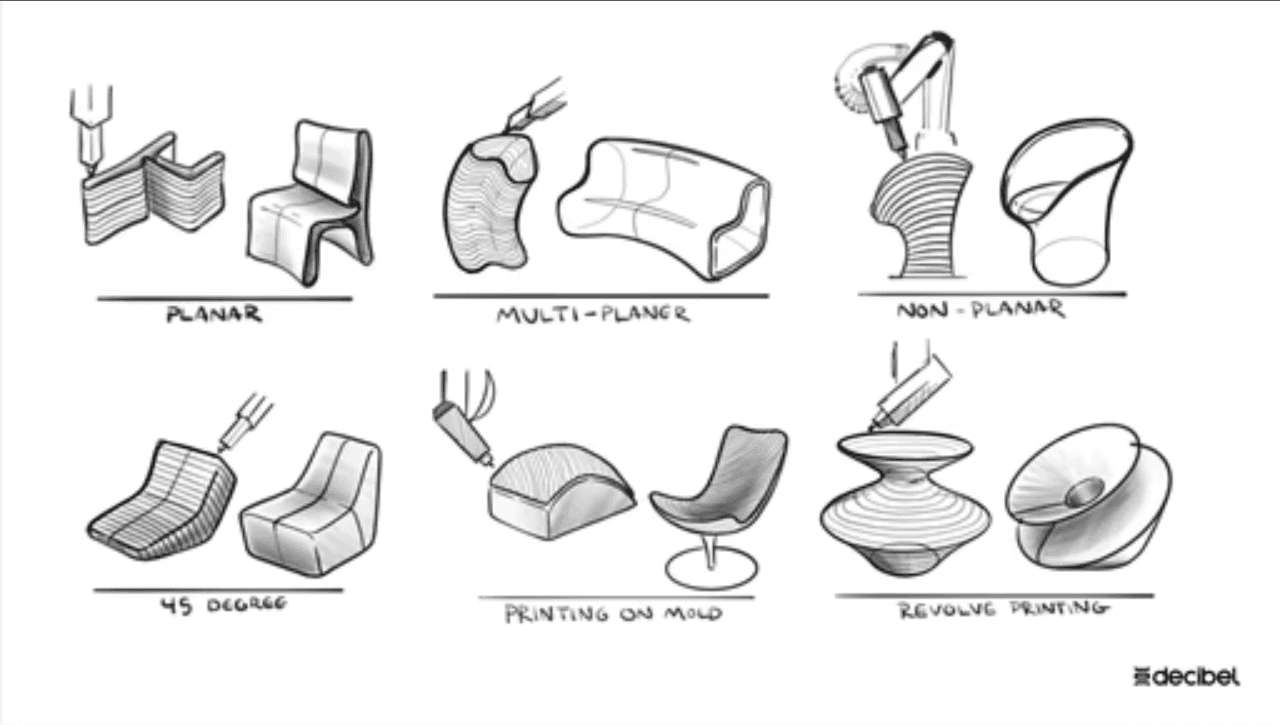
Design a chair that transcends mere functionality by engaging users through storytelling, reflecting a unique purpose, and inspiring a movement. The design must be manufacturable using one of six 3D printing methods and demonstrate the use of Vizcom AI tools in the design process.
Competition Criteria:
Storytelling: How effectively does the design convey a narrative?
Innovation: Originality in addressing the challenge
Functionality & Aesthetics: Balance between usability and visual appeal
Vision: Conceptual impact and potential to inspire change
The Concept
The core idea is simple but powerful: furniture designed exclusively for thinking and nothing else. Just as we have dedicated spaces for eating, sleeping, and working, SKEPSI creates a physical and psychological environment specifically for contemplation.
The design is rooted in two key insights:
1. Embodied Cognition
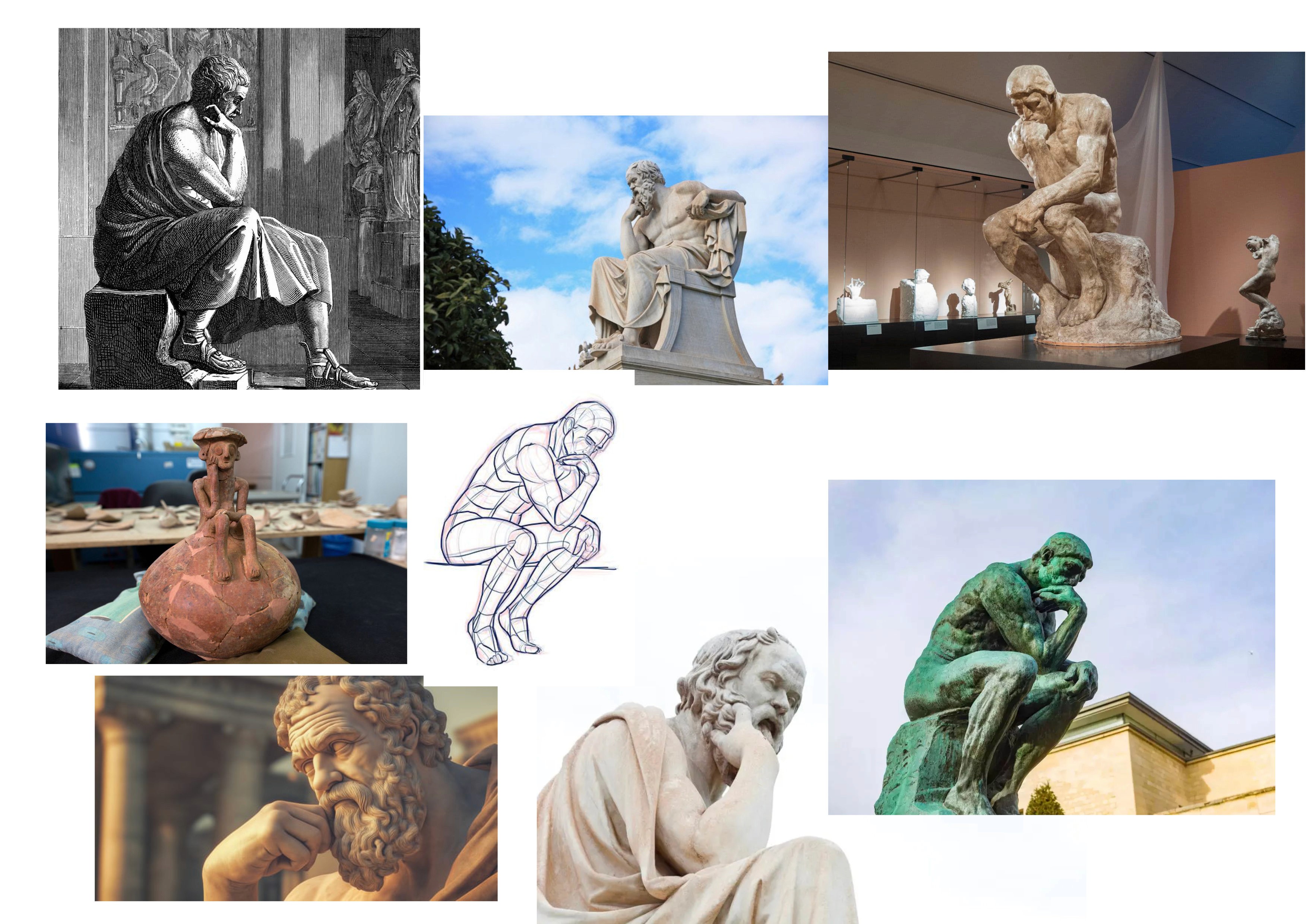
Throughout history, humans have depicted deep thought in a consistent posture: seated, leaning slightly forward, hand supporting the chin, elbow resting on the thigh. This isn't random. Research in embodied cognition confirms this position naturally enhances critical thinking and problem-solving. From Bronze Age pottery to ancient Greek philosophers to Rodin's "The Thinker," this posture appears across cultures and millennia.
2. Environmental Association
Our surroundings trigger specific mental states. By creating a dedicated object for thinking, used for nothing else, the mind becomes conditioned. Sitting on SKEPSI becomes a signal: "It's time to think." This framing effect makes it easier to enter a reflective state, similar to how a meditation cushion or workspace can prime our mental approach.
The chair deliberately avoids comfort. It's not designed for lounging or distraction. It's designed to maintain alertness while supporting the thinking posture.

Design Process
Research & Concept Development
I began by questioning why humans consistently depict thinking in a particular way. Research revealed the science of embodied cognition and how physical posture influences cognitive function. I studied historical depictions: Greek philosophers, Renaissance art, Rodin's sculpture, and noticed even I naturally adopted this position when deep in thought.
The ancient Greek aesthetic emerged as the perfect visual language: Greek philosophers pioneered contemplative thinking, are frequently depicted in this posture, and their architectural details carry gravitas and permanence, qualities I wanted the chair to embody.

Early Exploration with AI
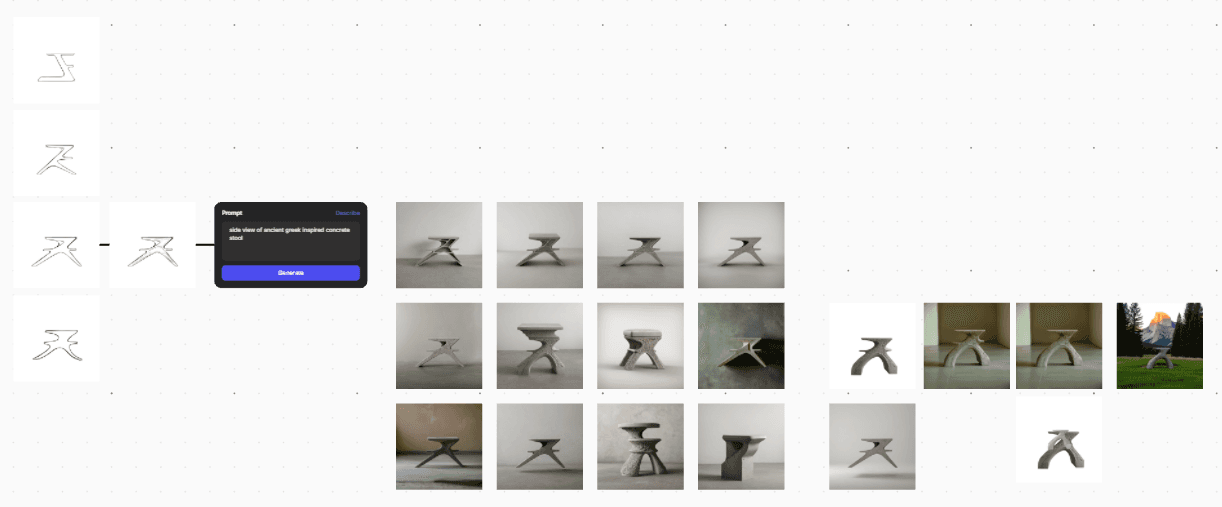
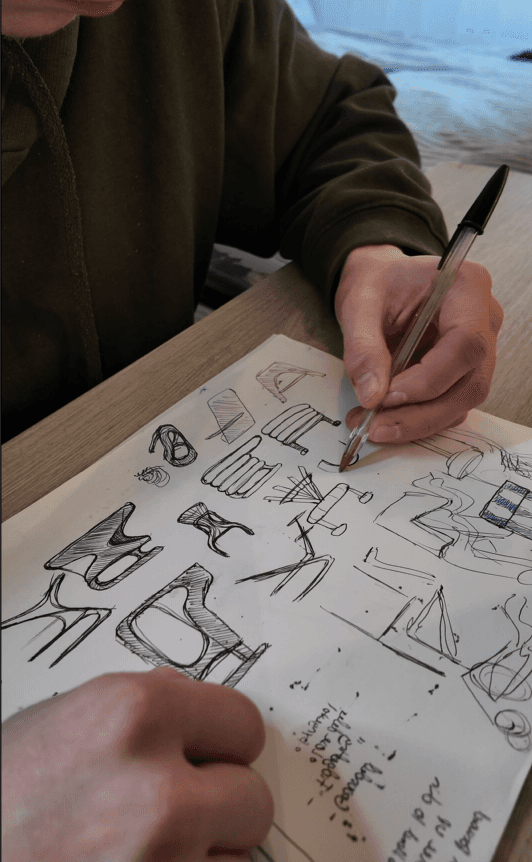
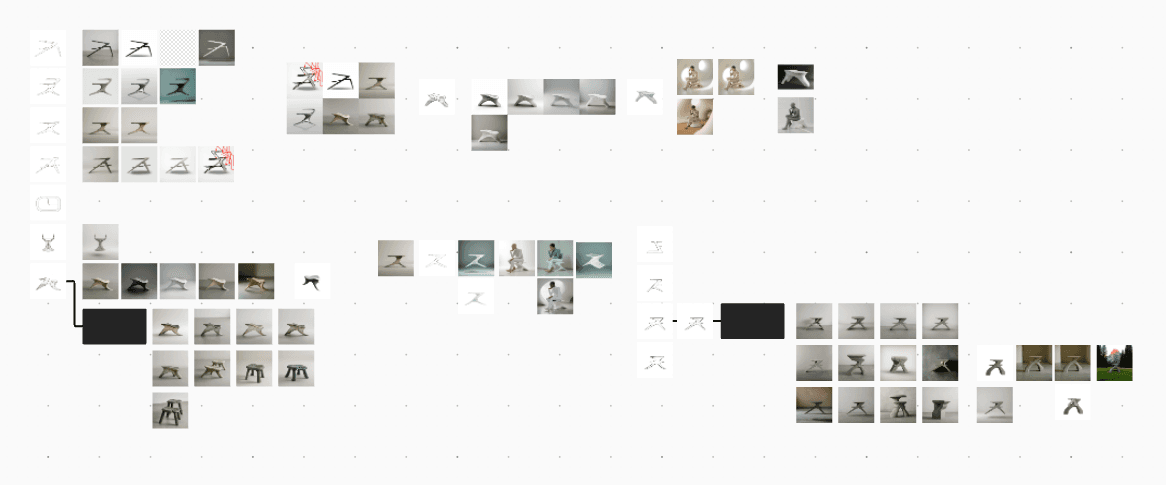
I compiled reference images of furniture that could support the thinking position and began sketching variations in Procreate. Because the competition required demonstrating Vizcom usage, I used it to rapidly visualize these sketches. Testing different proportions, leg structures, and aesthetic directions without spending hours on 3D modeling. This AI-assisted workflow allowed extremely fast iteration, moving from rough sketch to convincing visualization in minutes rather than hours.

3D Form Development
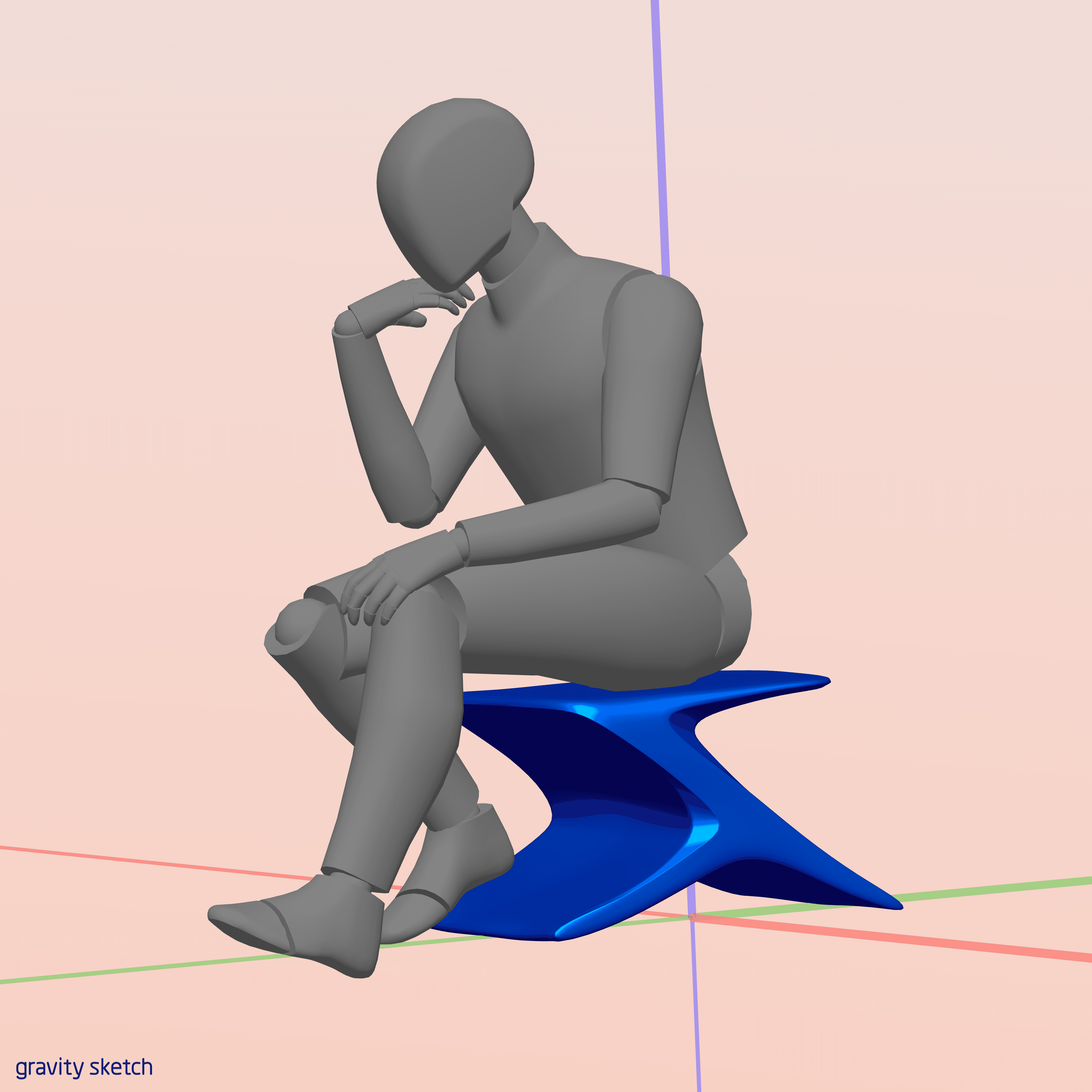
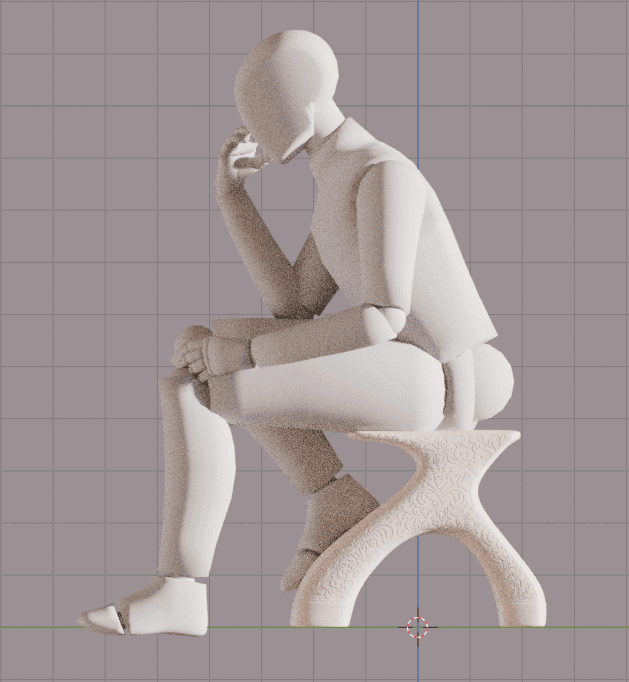
With a visual direction established, I moved into Gravity Sketch to develop the form in three dimensions. I imported human mannequin models to test how the design actually supported the thinking posture, then adjusted seat angle, leg height, and footrest extension based on ergonomic testing in VR.
The workflow became cyclical: model in VR → screenshot → AI render in Vizcom → evaluate → refine model. This kept iteration speed high while maintaining visual quality.

Refinement & Simplification
Early iterations explored more complex, futuristic forms, but I realized the design needed simplicity. This chair isn't about looking different. It's about feeling permanent, grounded, and timeless. Something an ancient Greek philosopher could sit on, but that would also work in a contemporary home.
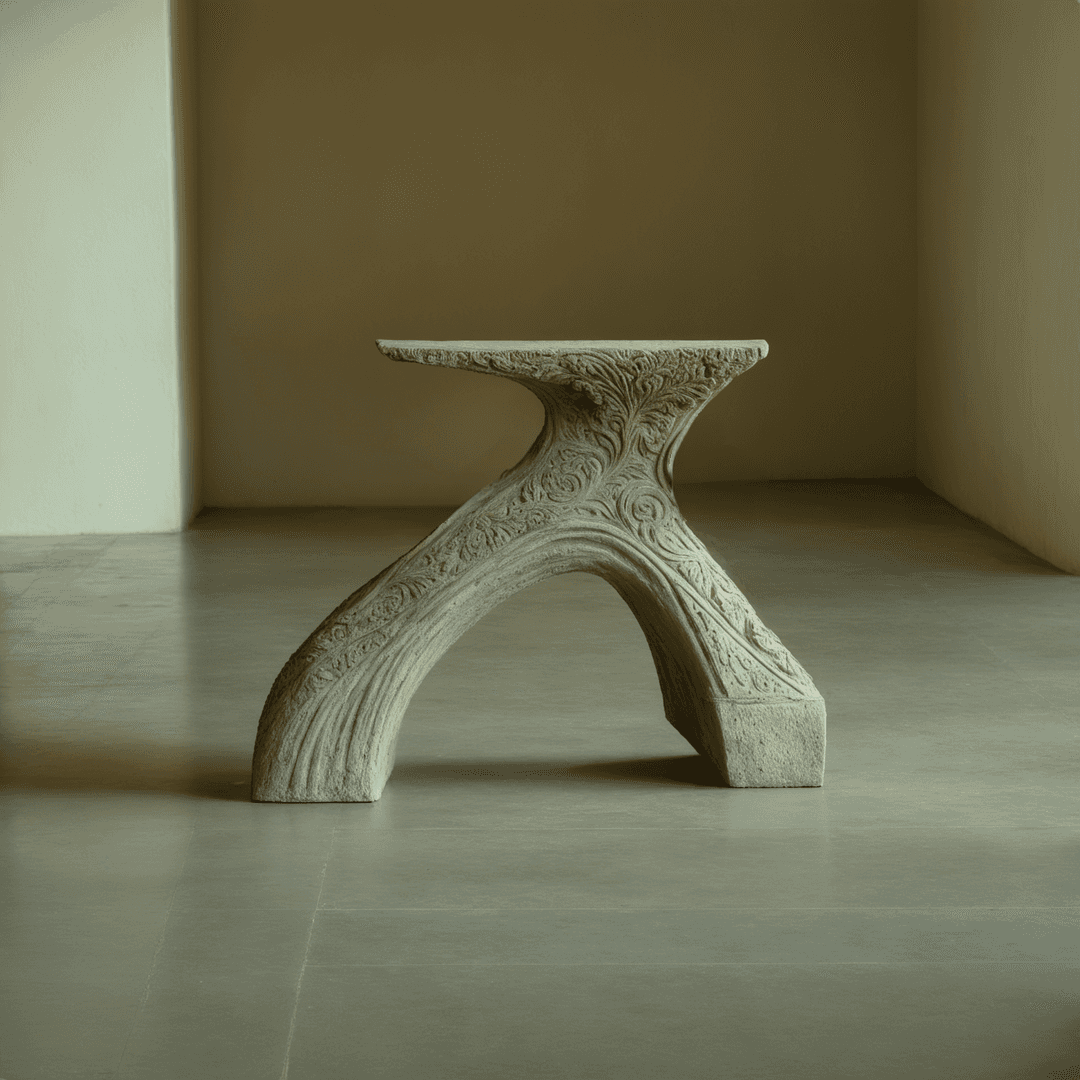
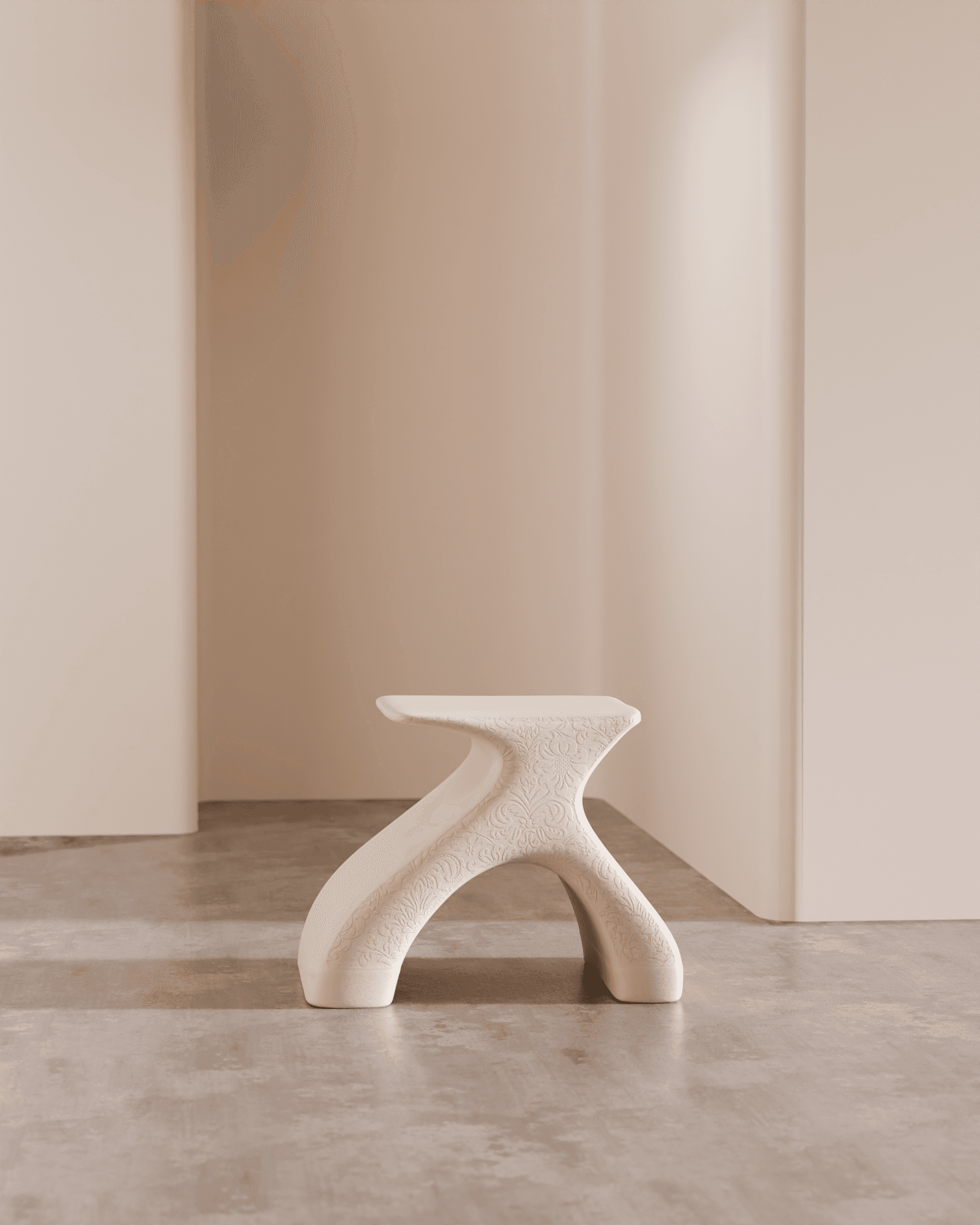
I simplified the form to two thick legs descending directly from the seat, creating a monolithic presence. The chair needed to feel like a permanent structure, almost like a stone podium or sculpture rather than lightweight furniture. Greek-inspired floral patterns were added as surface engravings, creating visual interest while reinforcing the philosophical heritage without being literal.
Final Design & Technical Development
The final design was refined in Blender with texturing in Substance Painter. It would be printed in rPETG (recycled Polyethylene Terephthalate Glycol) and the material finish and color mimic stone in an off-white/beige tone.
The planar printing method preserves both structural integrity and decorative surface details while keeping manufacturing feasible.
Key Design Features:
Slightly forward-leaning seat to naturally encourage the thinking posture
Extended front edge doubles as footrest for knee support
Firm, unpadded surface to maintain alertness rather than relaxation
Two-leg structure for stability and visual weight
Greek-inspired surface engravings adding texture and cultural reference
Stone-like finish suggesting permanence and gravitas


Outcome & Reflection
Outcome & Reflection
While SKEPSI didn't win the competition, the project taught me valuable lessons about designing with purpose beyond aesthetics and solving problems through thoughtful constraint.
What I Learned:
Storytelling Through Function: In a category as saturated as furniture design, differentiation comes from purpose, not just form. Thousands of new chairs are designed every year. What makes something memorable is the story it tells and the problem it solves. SKEPSI isn't "another chair", it's a tool for reclaiming mental space.
Designing for Behavior Change: This project taught me that good design can shape behavior. By creating a dedicated object for a single purpose, you create psychological associations that make that behavior easier to adopt. The chair becomes a reminder and facilitator of the habit you want to build.
Balancing Constraints with Vision: Designing for a specific manufacturing process (planar 3D printing) while maintaining aesthetic and functional goals required constant problem-solving. The technical constraints actually strengthened the final design by forcing simplification.
AI as a Design Accelerator: Using Vizcom throughout the process dramatically increased iteration speed. Instead of committing to fully modeled and rendered options, I could test dozens of variations quickly, reserving detailed 3D work for the most promising directions.
What Worked:
SKEPSI addresses a real problem with a clear, research-backed solution. The functional details (forward seat angle, firm surface, footrest) directly support the intended use case. The aesthetic successfully balances historical reference with contemporary form.
What Could Be Stronger:
The final design is intentionally simple, which serves its function but may lack the visual innovation judges sought in a competition context. A more radical formal exploration might have been more eye-catching, though potentially at the expense of the timeless quality I wanted.
Broader Impact:
Beyond the competition, SKEPSI represents my interest in designing objects that address psychological and behavioral needs, not just functional or aesthetic ones. In a world drowning in distraction, we need thoughtfully designed spaces.