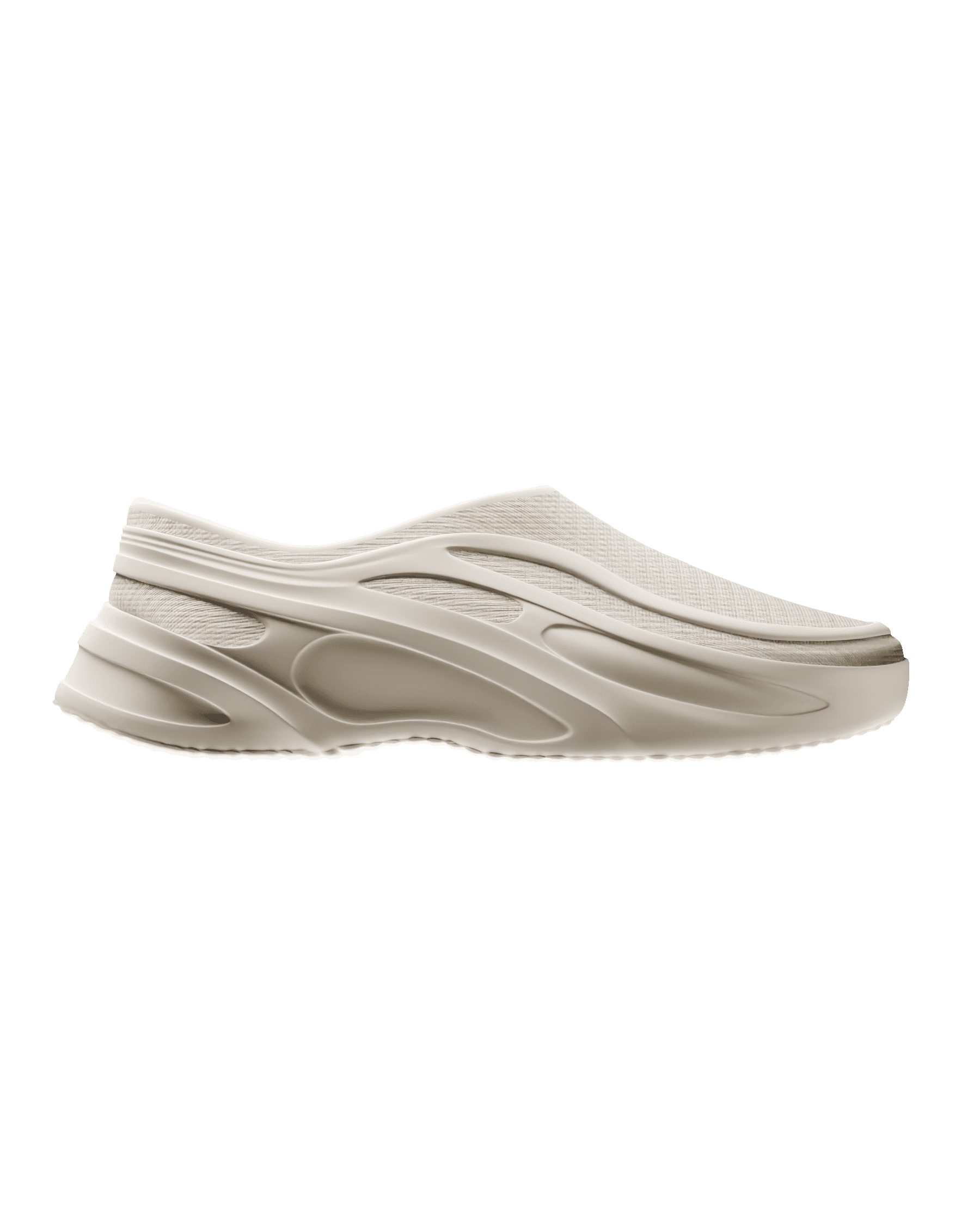
YMIR Dune, engineered by Zellerfeld
Intro
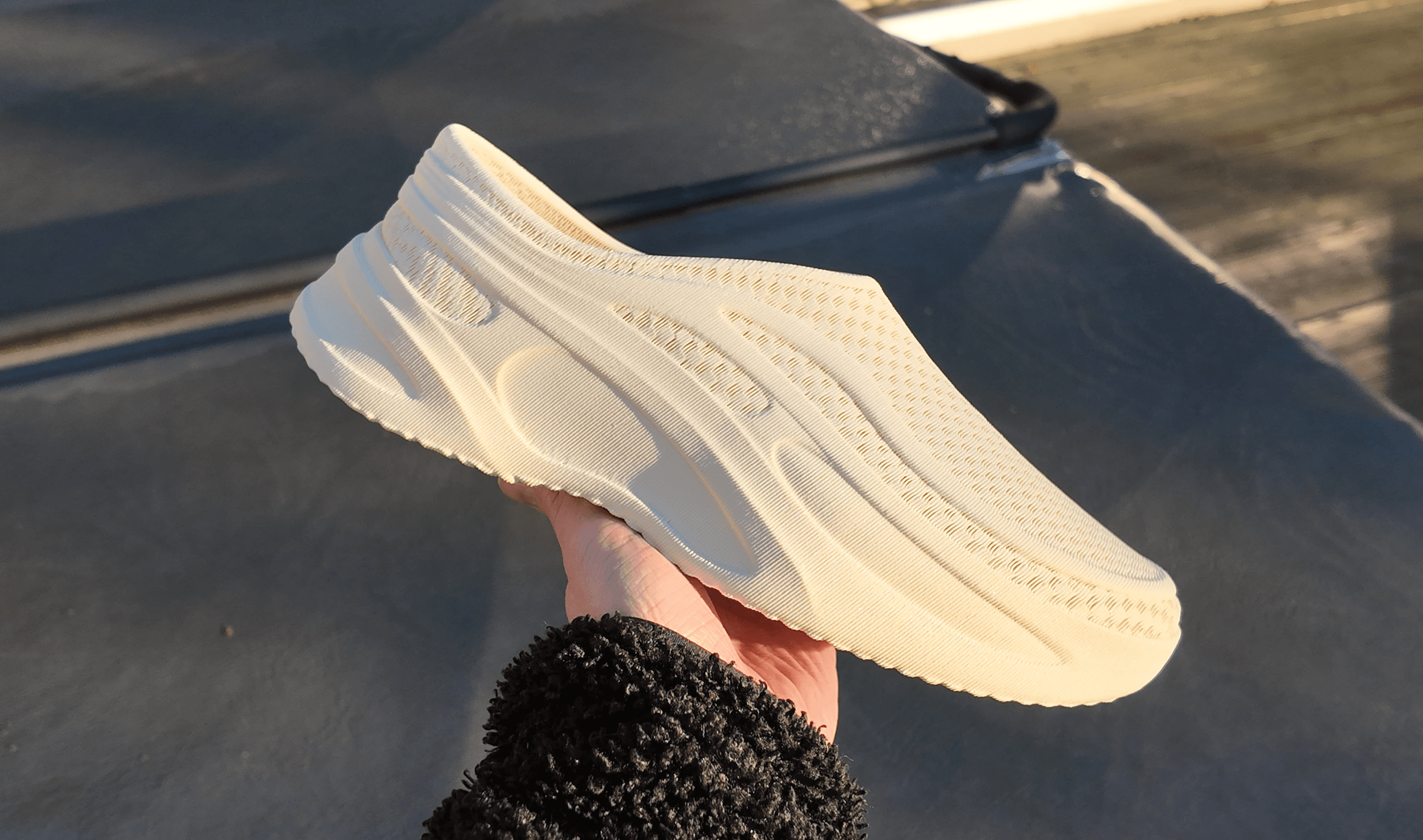
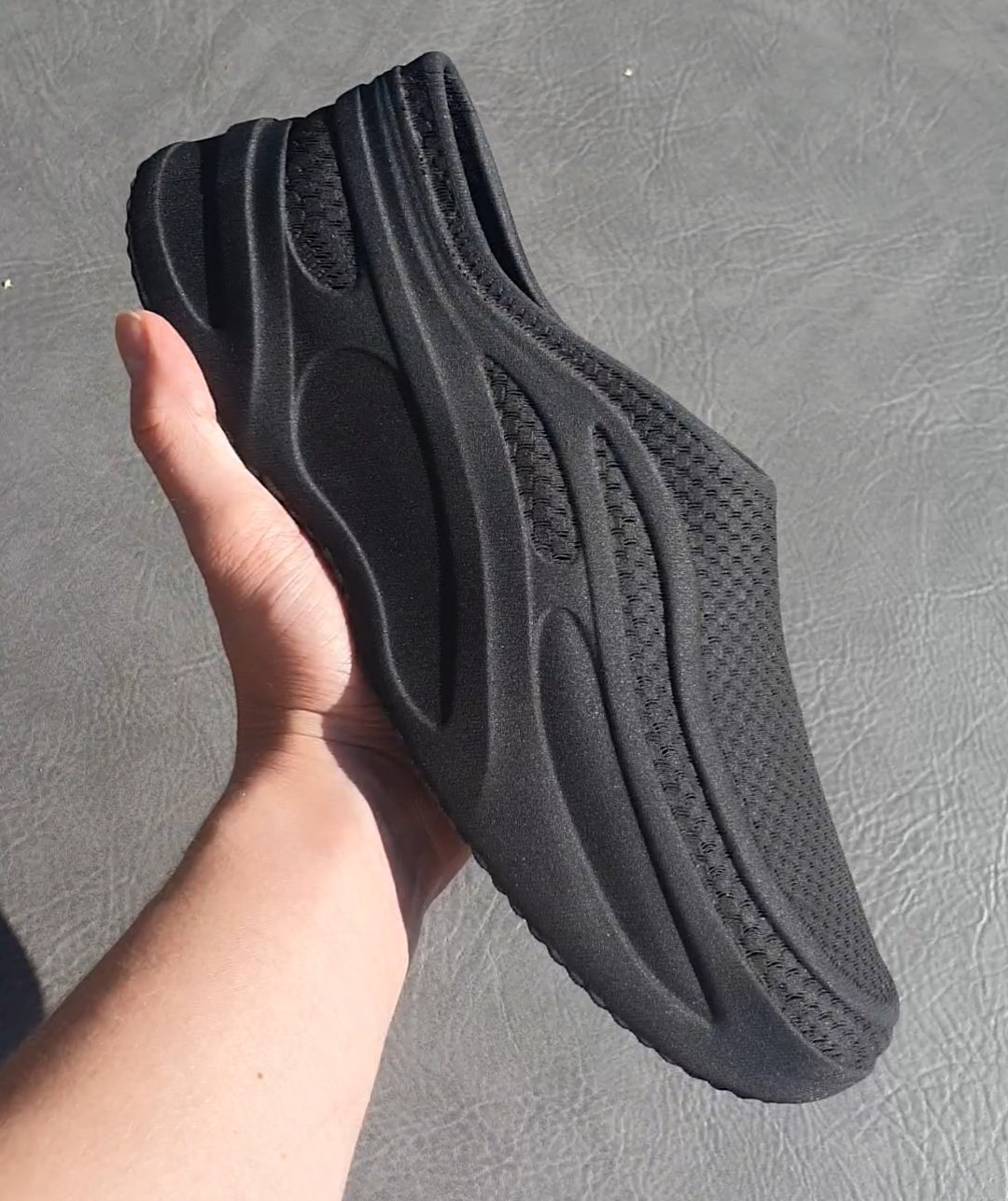
YMIR Dune is a fully 3D-printed shoe designed for Zellerfeld's revolutionary footwear platform. As one of the first designers invited to work with Zellerfeld during their beta phase, I had the opportunity to explore how emerging additive manufacturing could reshape footwear design. The shoe is custom-fitted to each customer's exact foot dimensions through phone-based 3D scanning and printed on-demand.
Skills:
3D Printing
Creative Direction
Product Design
Ideation
Sketching
3D Modeling
Texturing
Rendering
Year
/
2024
Personal Project
Footwear
The Challenge
Design a wearable, functional shoe that pushed the boundaries of what 3D printing could achieve while working within strict technical constraints of an evolving technology. The project required balancing aesthetic ambition with manufacturing reality, adapting the design as Zellerfeld's capabilities improved throughout the development process.
Key Constraints:
Must be 3D printable in TPU using Zellerfeld's process
Must follow technical specifications for structural integrity and wearability
Design language initially restricted by early-stage printing limitations
Evolving technical capabilities requiring design pivots mid-process
The Concept
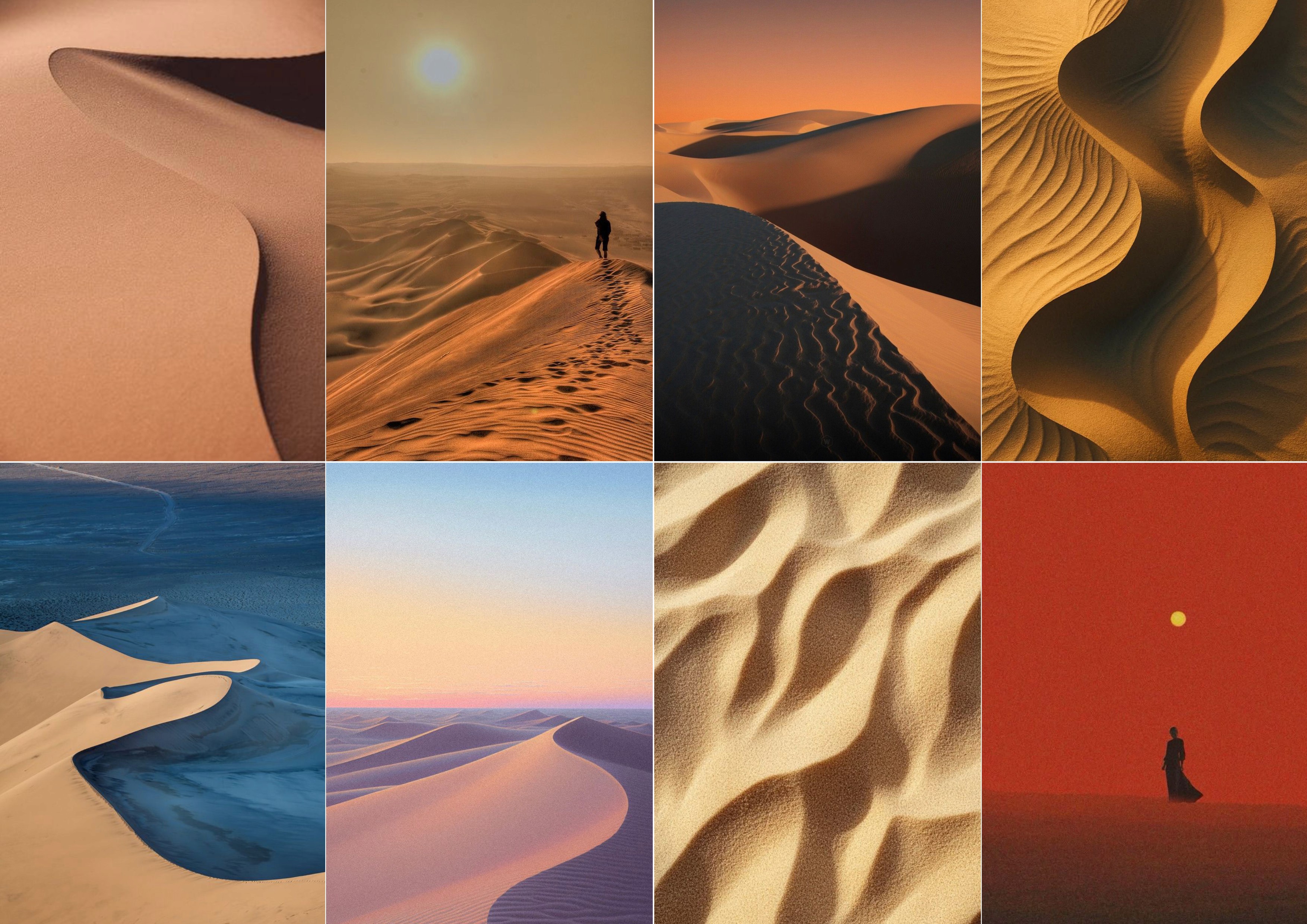
The desert became my visual and conceptual anchor. I was drawn to the duality of desert landscapes; beautiful yet daunting, inviting yet isolating. Sharp lines cutting through sand dunes, stark contrasts between light and shadow, the feeling of stepping into vast emptiness. This mirrored my own experience: Creating my first wearable shoe using untested technology, stepping into unknown territory. The design language translates this through flowing, organic forms interrupted by sharp lines mimicking how sunlight contrasts on the sand dunes.
Design Process
Early Exploration
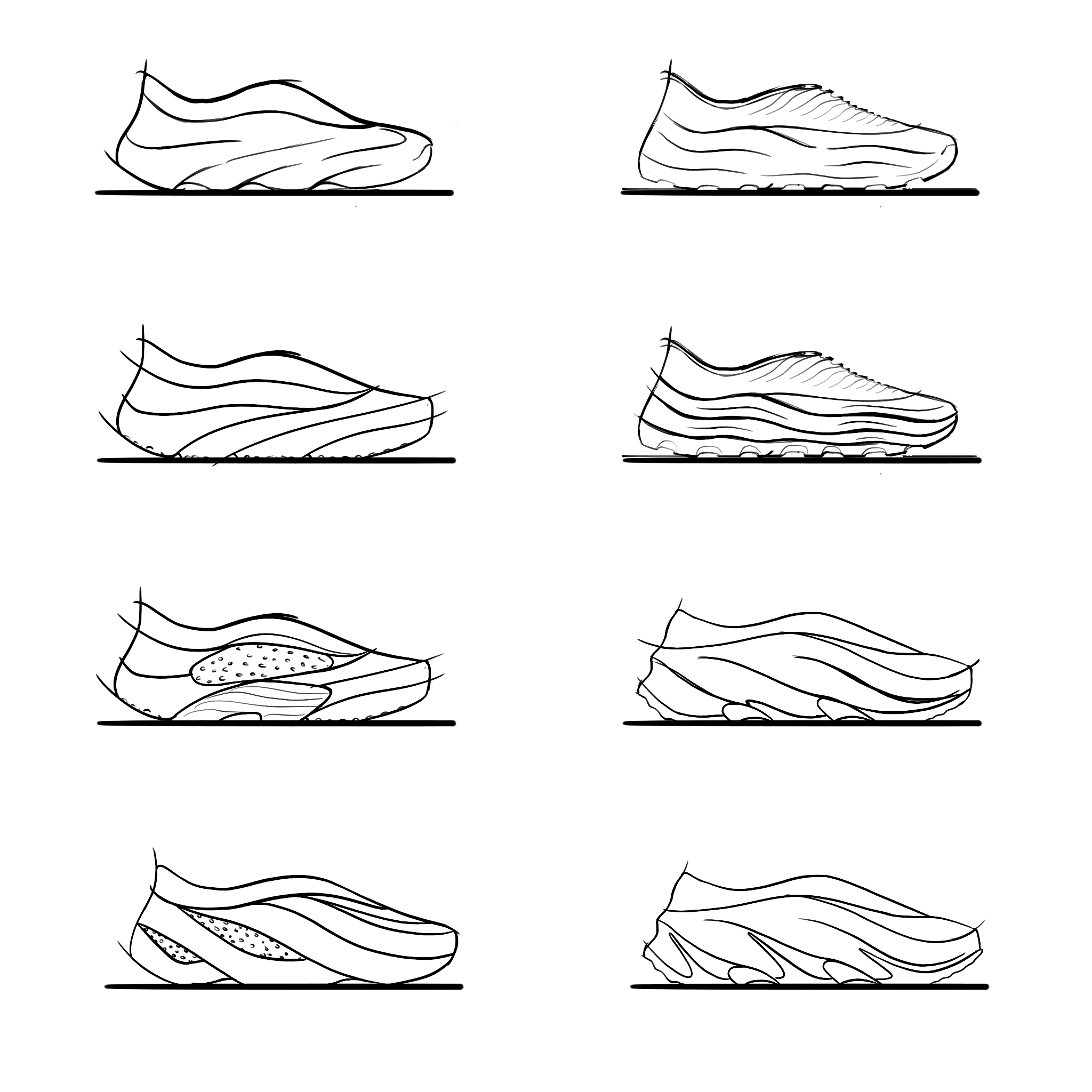
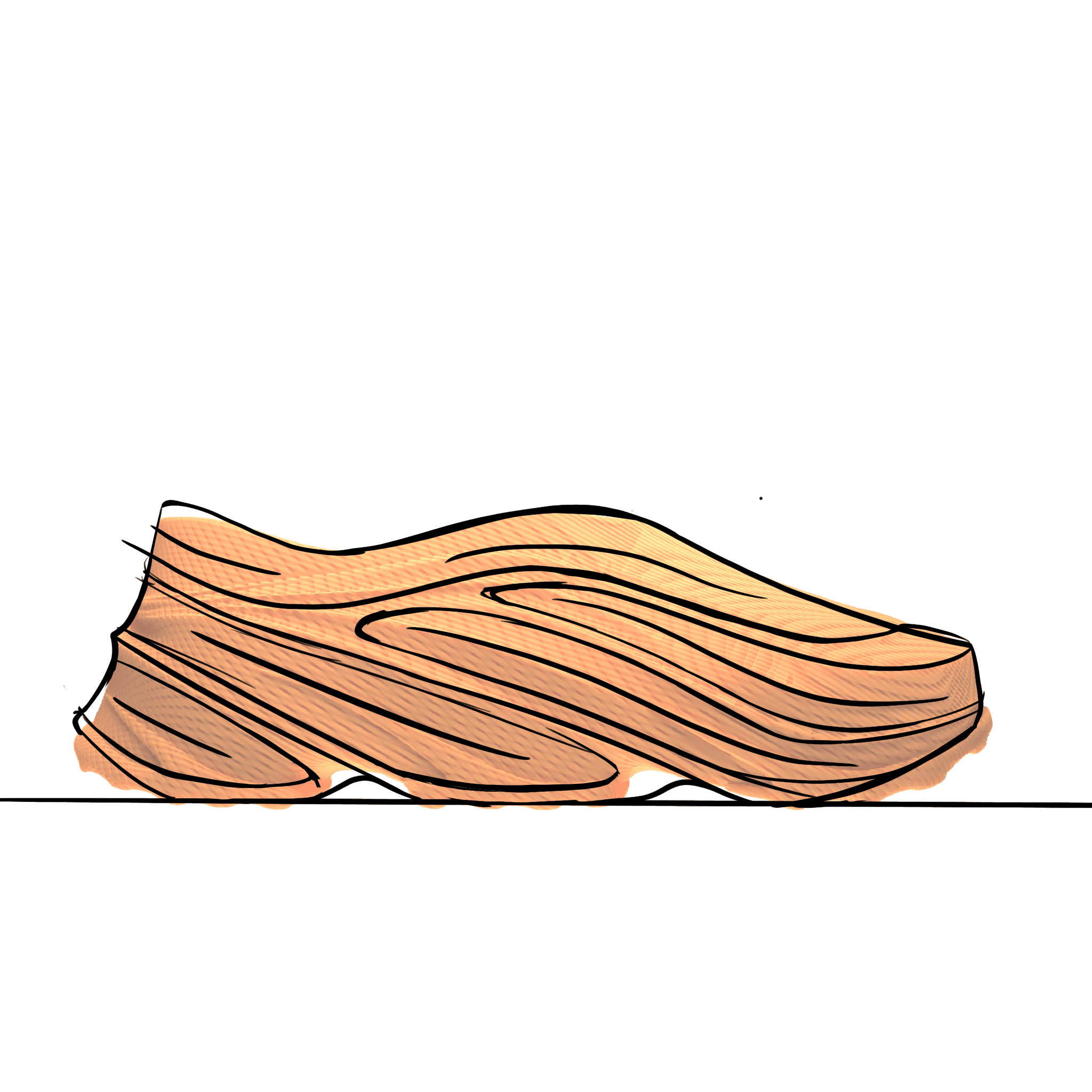
I began by studying the last provided by Zellerfeld and exploring silhouettes through 2D sketching in Procreate. This allowed me to get a sense of the proportions and iterate quickly before committing to 3D work. Once I had the basic silhouette, I could explore ways to incorporate the main concept and storytelling elements into the design.
3D Concept Development
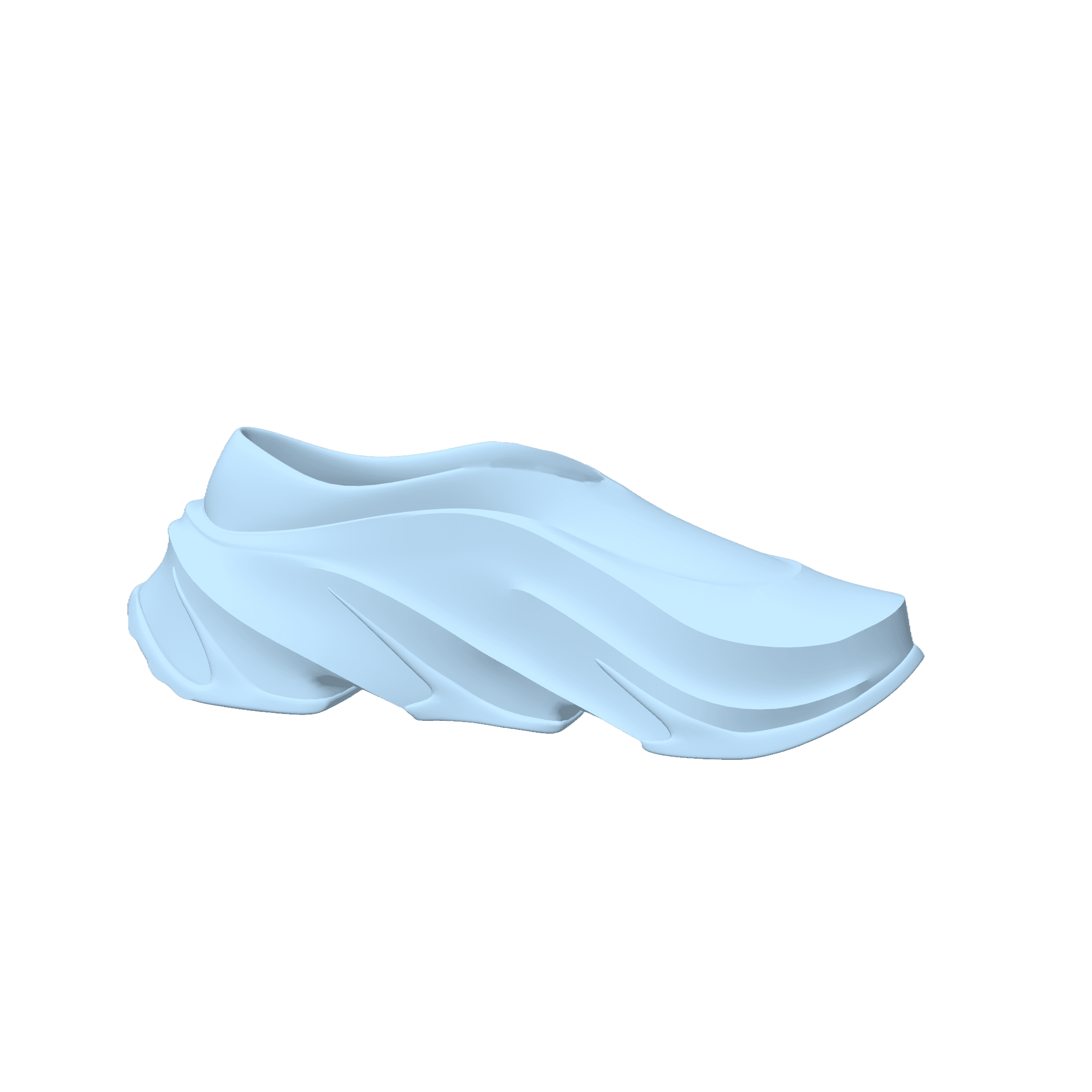
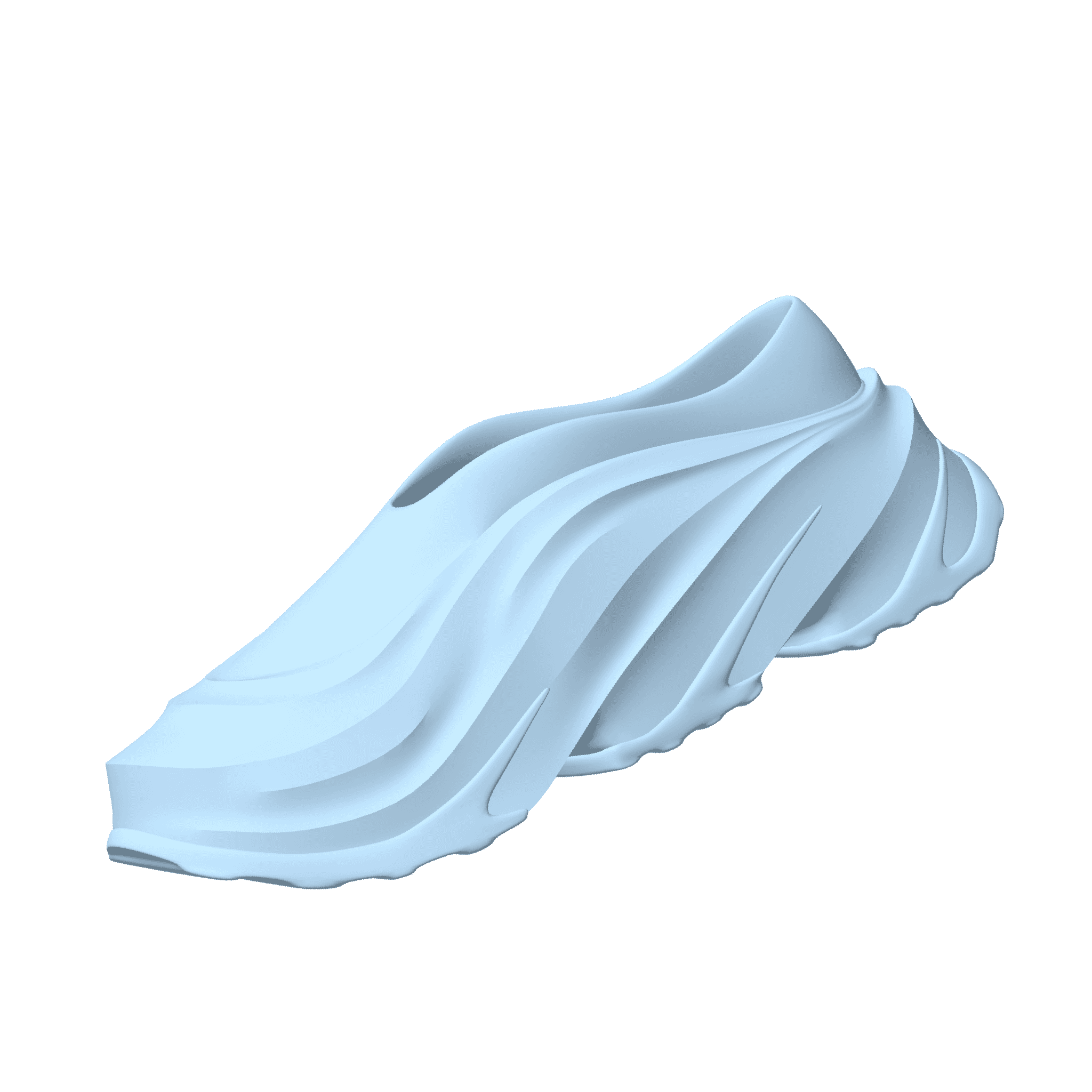
Using Gravity Sketch in VR, I translated my favorite design sketches into rough 3D forms. VR modeling allowed me to work intuitively with organic shapes and immediately understand how forms wrapped around the foot in three dimensions. By creating a base silhouette and iterating through duplication, I could add and remove design details easily.
Design-Pivot: Texture Update
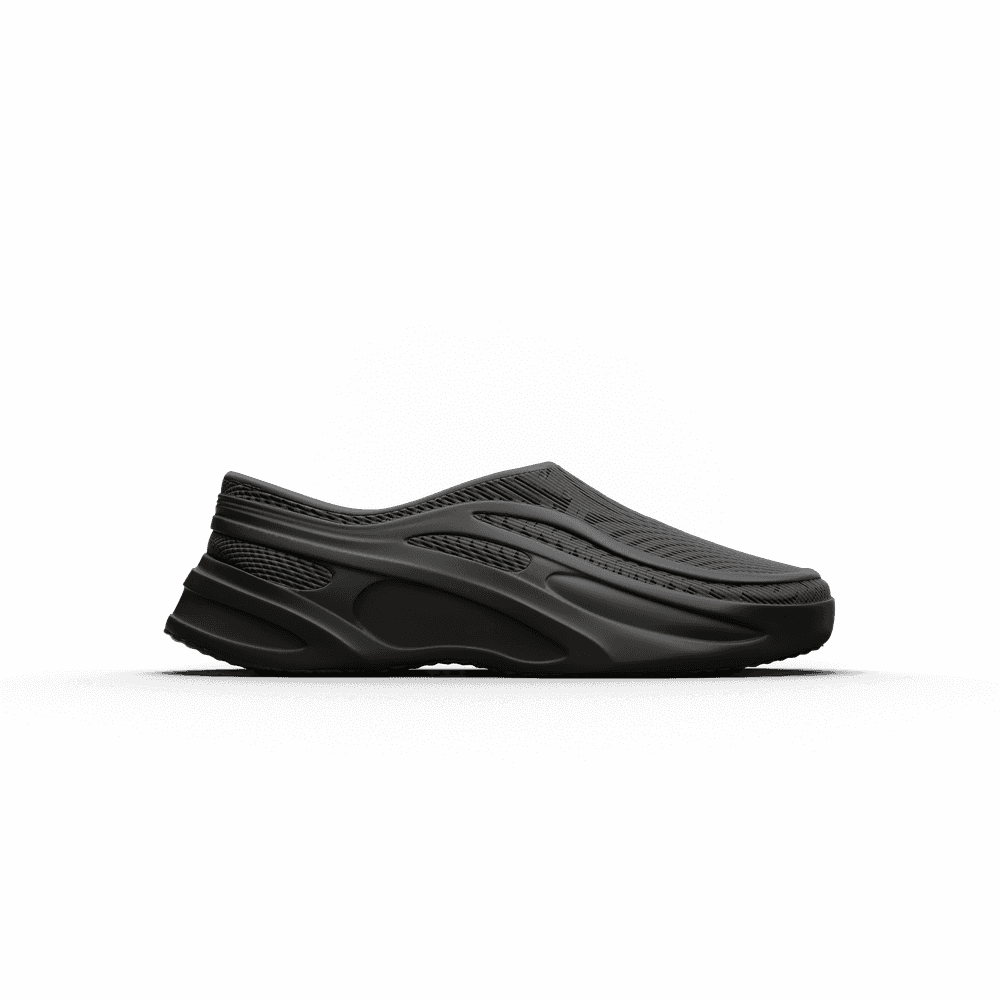
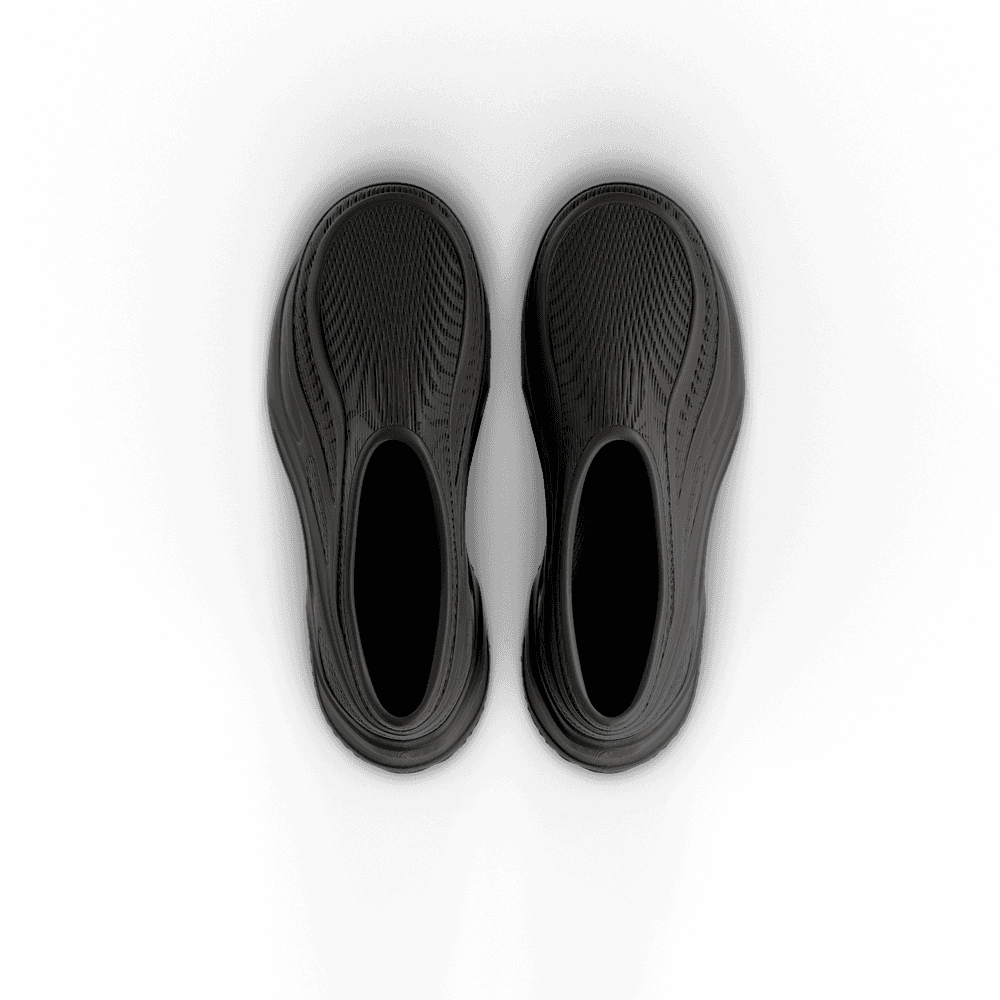
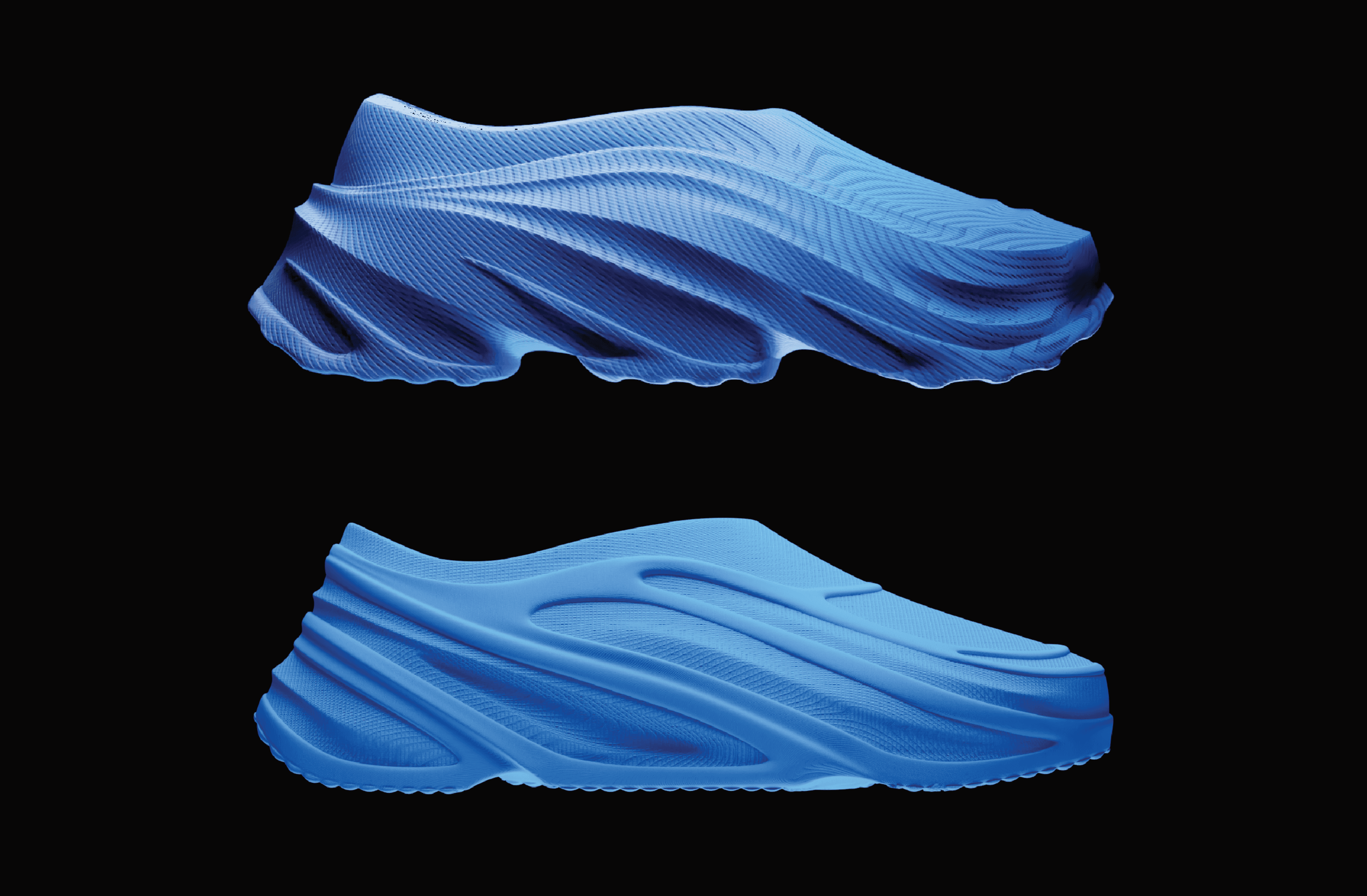
Midway through development, Zellerfeld introduced the ability to print with two distinct textures: A closed surface and an open mesh. This capability fundamentally changed what was possible aesthetically. Rather than compromising my original vision, I redesigned sections of the shoe to leverage this new capability, using the contrast between solid and mesh to strengthen the light/shadow concept and create more visual contrast.
Technical Refinement
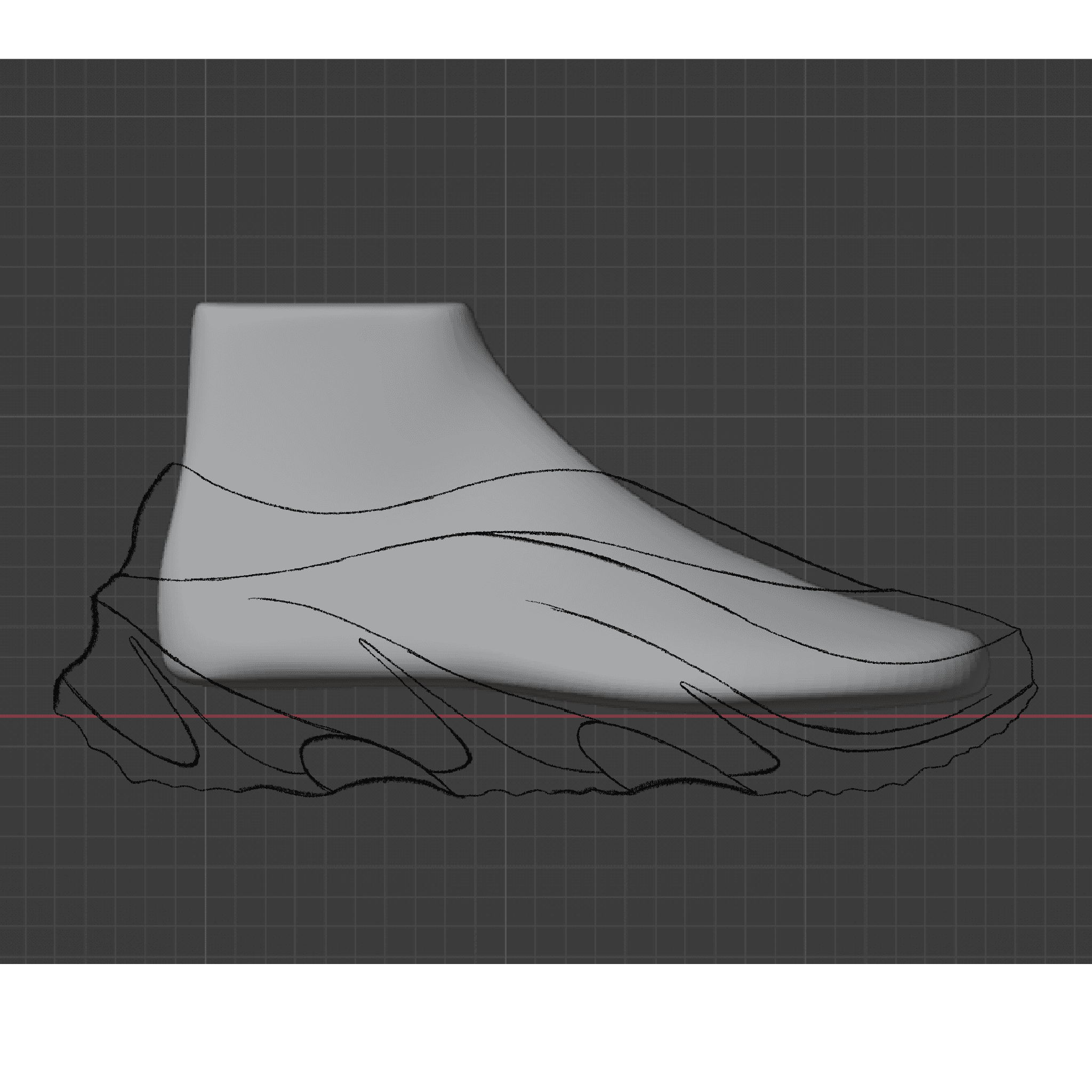
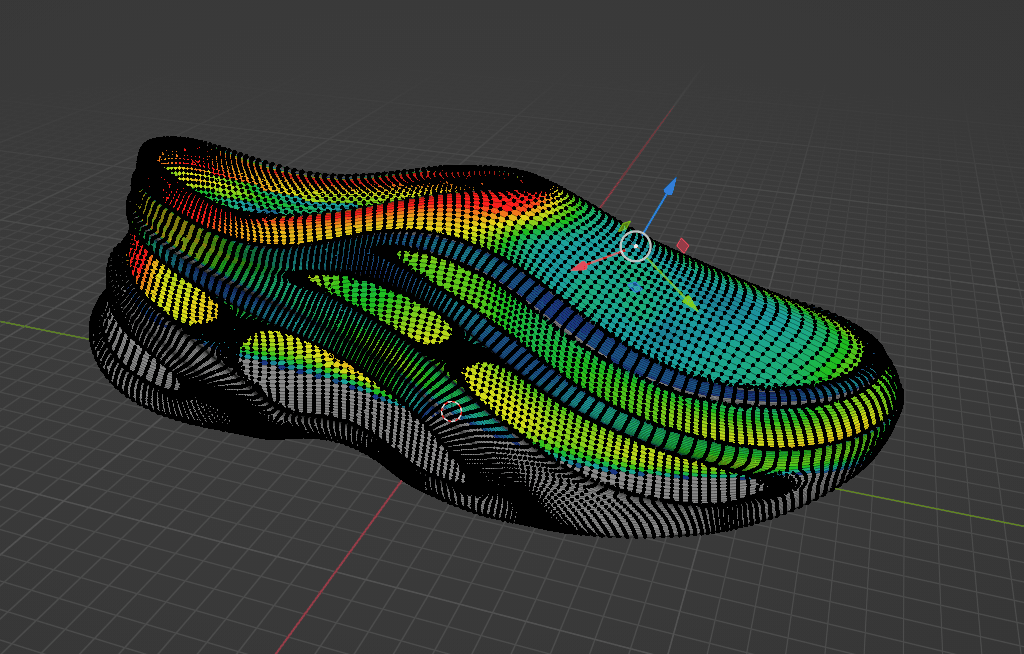
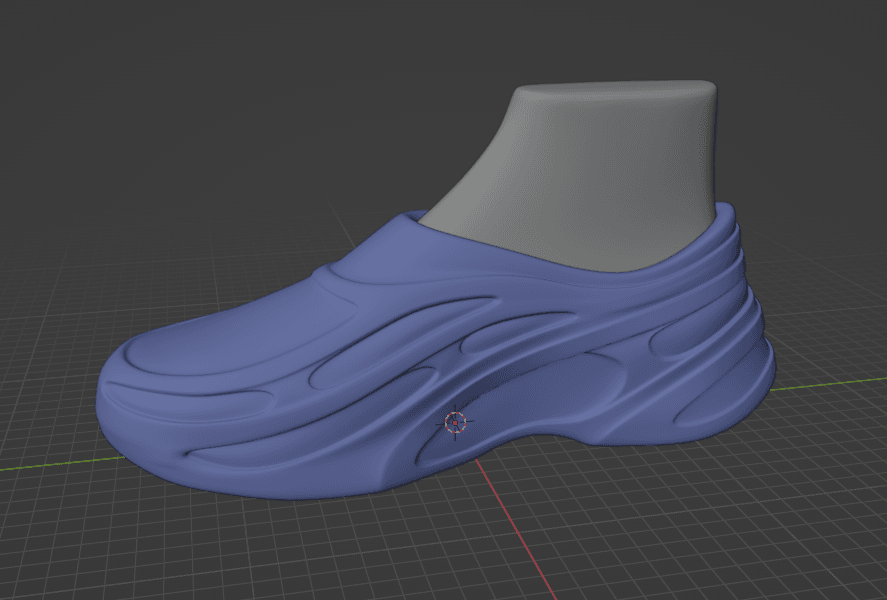
Moving into Blender, I refined the model to meet Zellerfeld's technical specifications. This phase involved countless iterations. Adjusting wall thickness by millimeters, ensuring structural integrity at stress points, optimizing the design for printability while maintaining the aesthetic vision. This was by far the most time consuming part, but also the part that thought me the most about the realities of making a manufacturable product.
Final Design
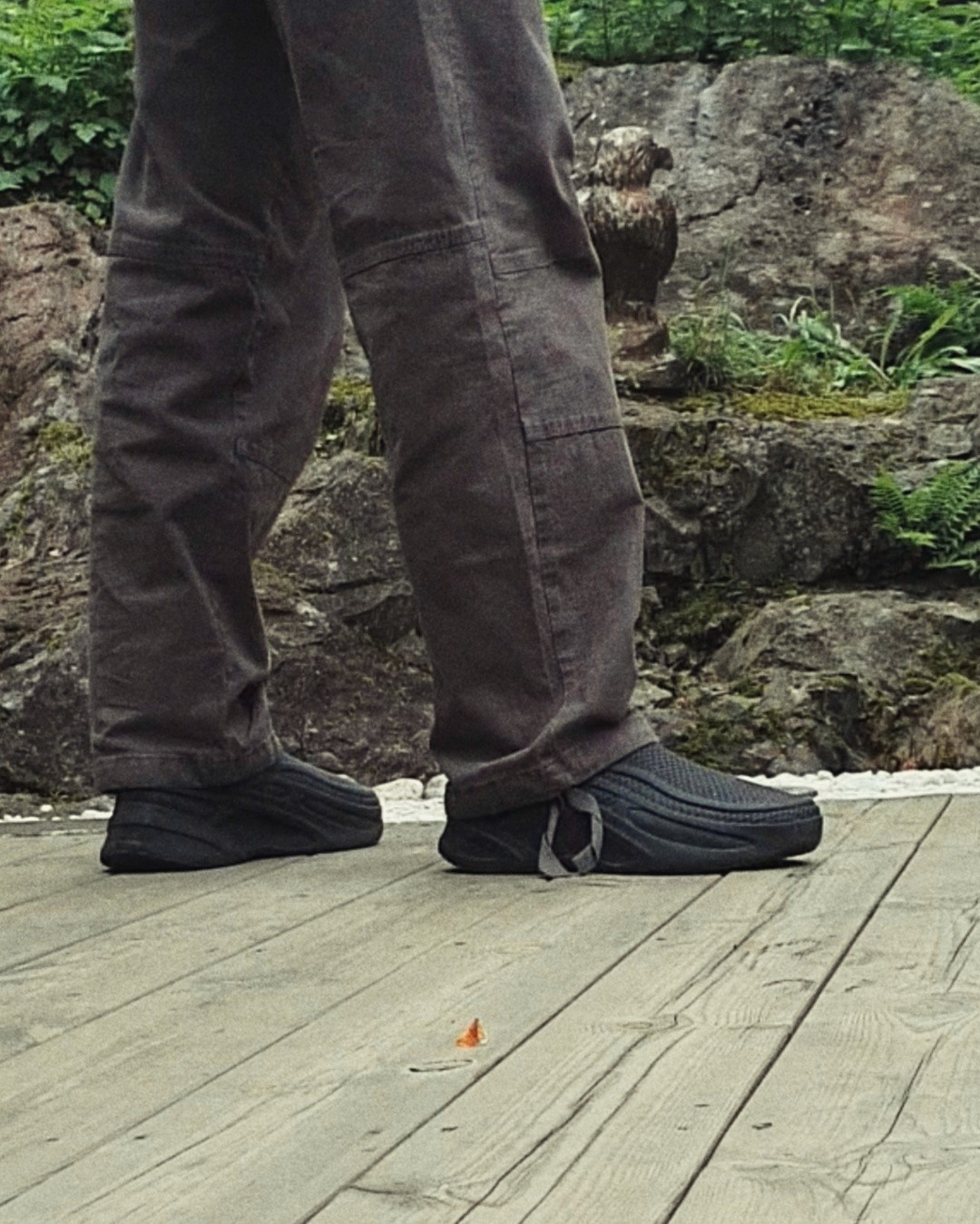
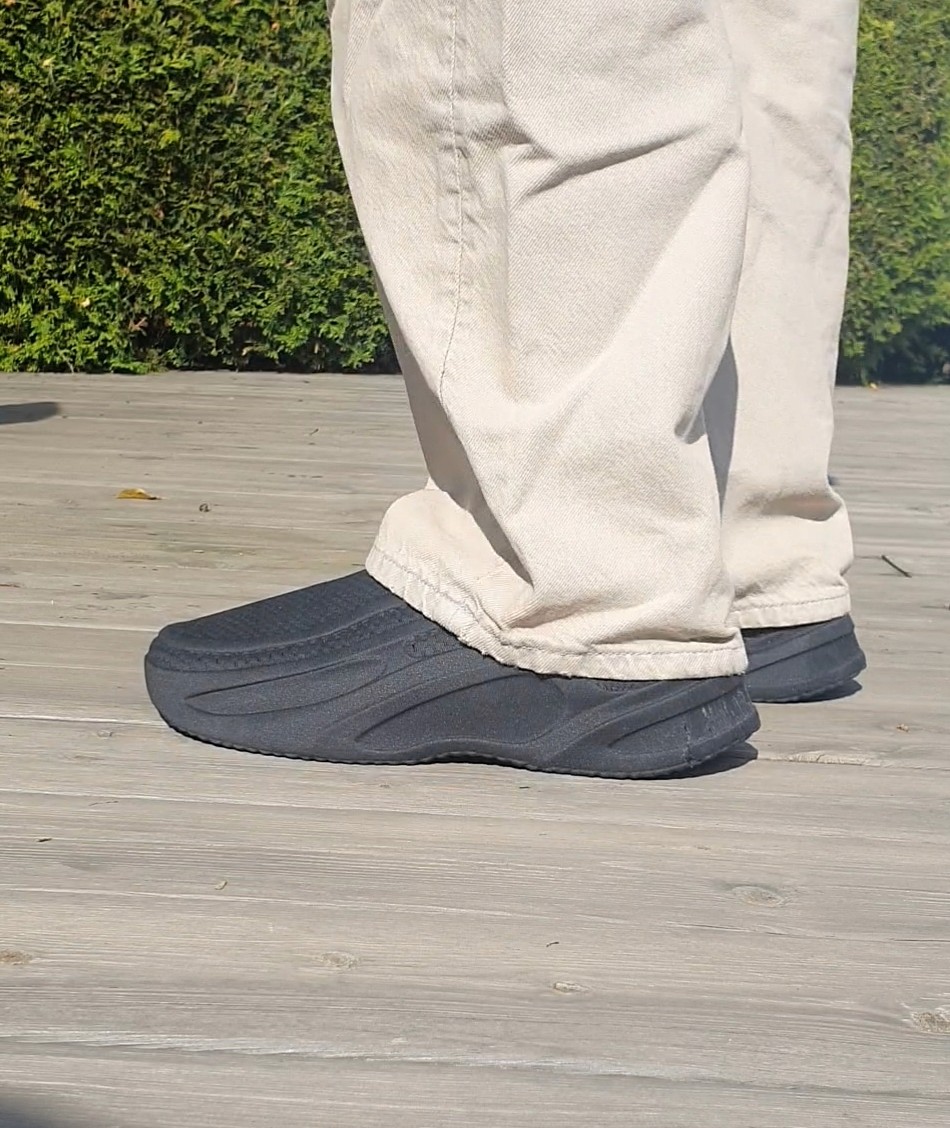
The completed shoe features flowing lines that follow the foot's natural contours, with strategic use of mesh and solid sections creating visual rhythm and functional breathability. The design balances structural support with aesthetic expression, with each element serving both form and function.
Outcome & Reflection
YMIR Dune launched as part of Zellerfeld's second wave of designer releases when the platform was still invite-only. While the technology has since become more accessible (with hundreds of designs now on the platform), being an early adopter gave me invaluable experience navigating the intersection of design intent and emerging manufacturing constraints.
What I Learned:
How to design within evolving technical limitations while maintaining creative vision
The importance of adaptability when working with new technology
That constraints often lead to more interesting solutions than complete freedom
The value of being early to emerging technologies, even when they're imperfect
If I were to revisit this design today, I would explore ways to push the material capabilities and aesthetics further. But this shoe represents an important moment, both personally as my first released footwear design, and industrially as part of the early wave proving 3D-printed footwear could be functional, beautiful, and commercially viable.